

Edinburgh is a vibrant hub of scientific activity, boasting a high level of research and innovation that’s truly undeniable. This is evident across the board, from its thriving universities and colleges to the diverse range of programmes on offer to students. You can read more about it on edinburgh1.one.
Educational institutions play a crucial role in advancing Edinburgh’s scientific prowess. They empower future leaders to unlock their potential, helping them discover the fields where they can truly excel and carve out their niche in the scientific community.
However, it’s worth noting that these organisations deserve individual attention as standalone entities. Each has its own fascinating backstory, which has, over time, become a valuable part of Edinburgh’s cultural and scientific heritage.
Heriot-Watt University is one such institution with a particularly compelling history. Its past is rich with unique facts that firmly establish it as a truly exceptional university.
The Early Days
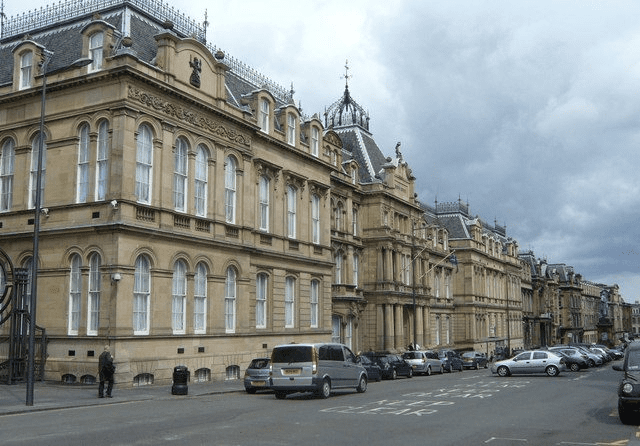
The institution’s journey began on 16th October 1821, when it was founded as The School of Arts of Edinburgh. The brainchild of Scottish businessman Leonard Horner, the school was managed by a board of 18 directors and funded by individual sponsors, including the world-renowned writers Robert Stevenson and Walter Scott.
First Innovations
1852 marked a significant turning point with the institution’s renaming to the Watt Institution and School of Arts. This ushered in a new era, characterised by a substantial expansion of the curriculum. Subjects beyond the exact sciences were introduced, a stark contrast to The School of Arts of Edinburgh, which primarily catered to the working class, particularly artisans.
The Watt Institution and School of Arts, however, opened its doors to students keen to study humanities, natural sciences, and social sciences. As a result, by 1885, the working class no longer constituted the majority of the institution’s students.
Facing Challenges
In 1873, the Watt Institution and School of Arts encountered financial difficulties. Its leadership sought assistance from the George Heriot’s Trust, a move that ultimately led to further structural changes within the institution. In 1885, it officially became Heriot-Watt College.
Crucially, these changes significantly eased the organisation’s financial strain.
An Unlikely Partnership

Following these transformations, the institution actively began to bolster its academic reputation. It was among the non-university institutions granted the right to appoint professors.
Beyond this, Heriot-Watt College also expanded its campus and buildings. Naturally, such expansion came at a cost to the George Heriot’s Trust, which by then played a vital role in funding the institution.
Ultimately, this financial responsibility most likely led to the College gaining independence in 1927.
Turbulent Times
Periods of unrest inevitably impact all aspects of life, and education is no exception.
During the First World War, Heriot-Watt College saw a significant drop in student numbers as young men went off to the front. Engineering teaching also ceased, as the faculty was repurposed for shell production.
The Second World War similarly affected the institution, again due to a shortage of students and the challenging circumstances of the time.
A New Status
Despite all the hardships, Heriot-Watt College persevered as time passed and the wars ended.
On 1st February 1966, the institution achieved a new status, becoming Heriot-Watt University.
Almost immediately, the organisation embarked on a path of active expansion. Soon, its existing premises became insufficient.
The University then received a generous gift from Midlothian County Council: the Riccarton estate. Renovation work began there in 1969 to create a new campus.
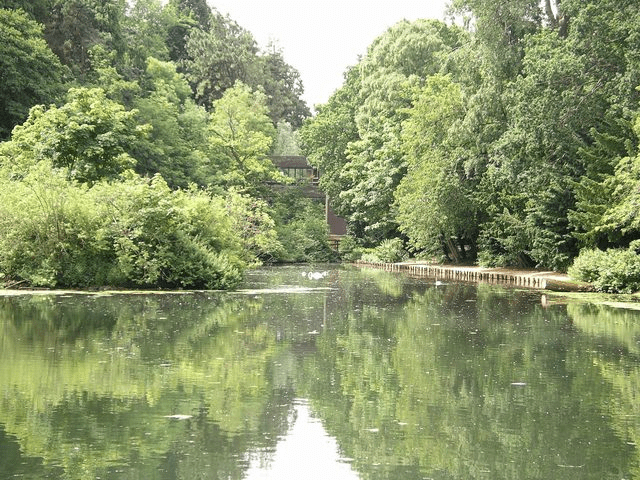
After the move, Heriot-Watt University continued its development, soon constructing several additional student halls of residence and a sports centre.
Heriot-Watt University can confidently be considered an exemplary educational institution, driven by a continuous desire for growth. Neither wars nor other challenging situations forced it to surrender. Of course, this wouldn’t have been possible without the support of influential individuals who provided invaluable financial and moral assistance. Objectively, the institution faced the brink of bankruptcy several times throughout its history.
Yet, despite everything, it managed to endure, leaving numerous difficulties behind. Perhaps the saying “born under a lucky star” isn’t solely applicable to people. For any organisation, stepping onto the path of success and independence is equally crucial.
Analysing the entire past of Heriot-Watt University leads to one conclusion: this institution managed to secure its cherished good fortune. It was, indeed, destined for immense success.