

It’s hard to argue with the high quality of Scottish education and its unique academic programmes. A significant part of this success undoubtedly comes from the multitude of universities and colleges scattered across Scotland. Read more on edinburgh1.one.
Many renowned figures have unlocked their potential thanks to these institutions. Their histories are filled with fascinating facts, testament to the immense value of these places.
The University of Edinburgh stands out as a true jewel in Scotland’s scientific, cultural, and educational landscape. It has produced countless geniuses who went on to achieve colossal success in various fields. Its past is sure to captivate anyone interested in history.
A Storied Past
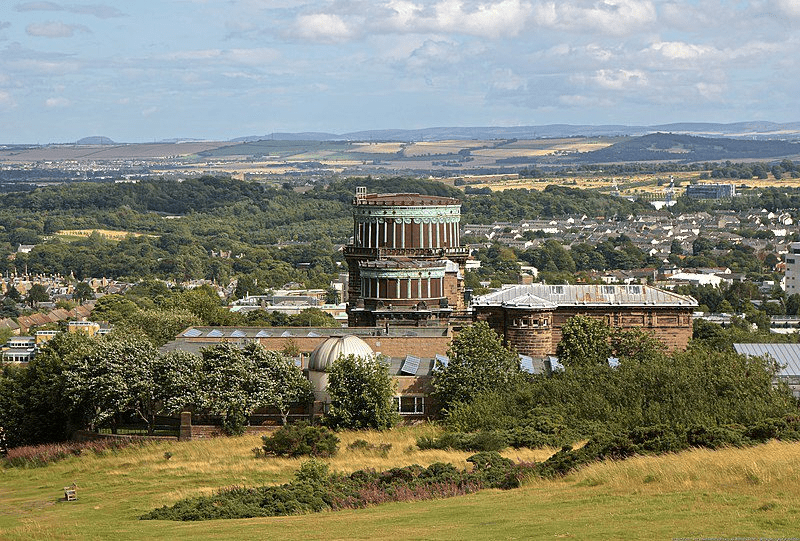
The true genesis of this institution can be traced back to the will of Bishop Robert Reid. This pivotal document included a significant donation for the establishment of a college in Edinburgh. Notably, Reid stipulated that alongside traditional subjects, the college should offer lessons in poetry and rhetoric – a highly unusual vision for the time.
However, subsequent revolutionary events delayed the execution of the will, and it wasn’t revisited until the late 1570s.
An Unconventional Foundation
The City of Edinburgh Council played a colossal role in the college’s construction. It was their official plea to the King that initiated the payment from Reid’s descendants to fund the works.
Consequently, the emergence of an educational institution founded by secular authorities came as a great surprise to Presbyterian Scotland, as such organisations had previously been established primarily by papal bulls.
Thus, Tounis College opened its doors to students on 14th October 1583. At that time, its curriculum was largely dedicated to humanities and theology.
Regarding leadership, Robert Rollock became the college’s first principal in 1586.
A New Name
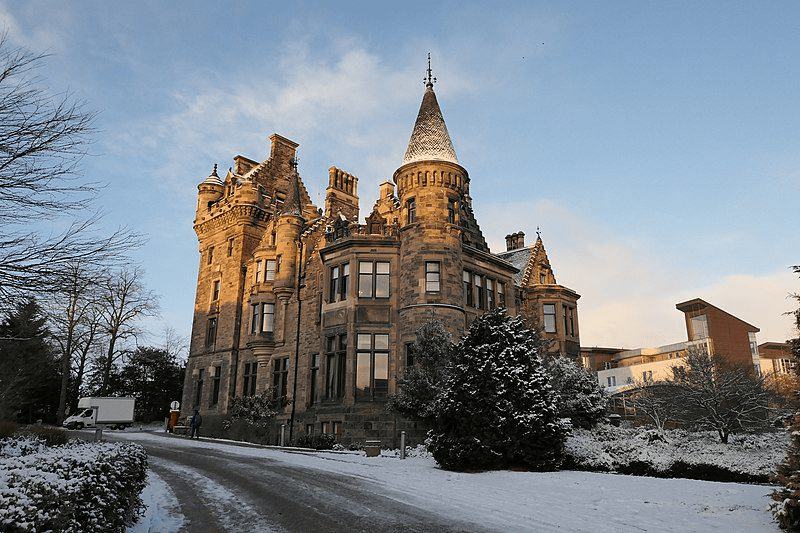
1617 marked a significant event for the college. King James VI visited Scotland on an official tour, and after meeting with the academic staff, he decided the college should be renamed King James’s College.
As a result, the organisation became known as both Tounis College and College of King James, until it finally adopted its definitive name in the 17th century: The University of Edinburgh.
Strained Relations
In the late 17th and early 18th centuries, the University and the City Council engaged in a fierce power struggle. The Council held considerable authority over appointing academics, approving curricula, and examinations.
When the situation reached its peak in 1704, local officials seized the institution’s documentation.
These strained relations took an exceptionally long time to mend, almost 150 years, and it was a challenging process.
A Pivotal Era
As for the University itself, it embarked on a period of significant expansion from 1707. This development led to the creation of a whole host of new faculties, including Law (1707), Arts (1708), and Medicine (1726).
When Hugh Blair took up the position of Regius Professor of Rhetoric and Belles Lettres in 1762, Edinburgh earned the status of the oldest centre for literary education in Britain.
From the 18th century, the University began to be regarded as the heart of the Scottish Enlightenment. This was hardly surprising, as the ideas of this era were largely embraced in Edinburgh, thanks to the University’s democratic and secular origins, as well as its unique organisation.
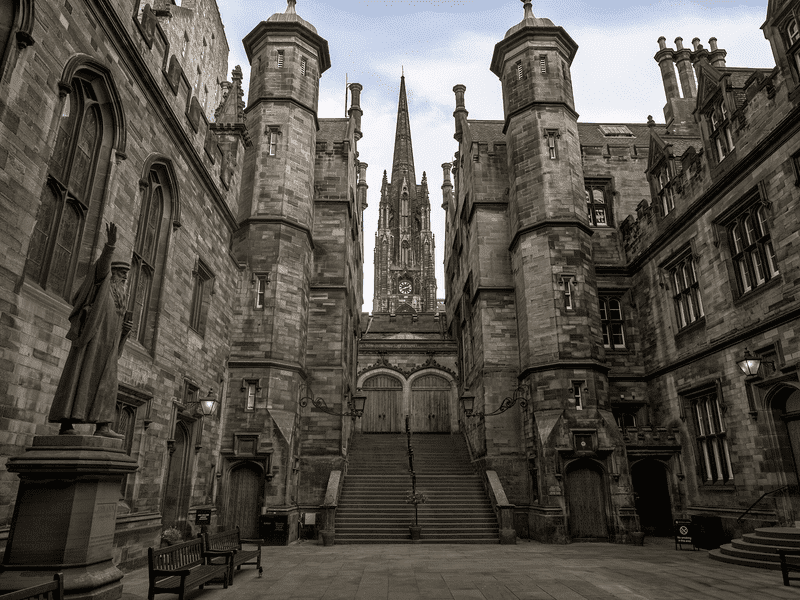
And when The Royal Society of Edinburgh was founded in 1783, The University of Edinburgh cemented its reputation as a prominent global scientific institution. Voltaire, impressed by its intellectual output, began to call Edinburgh “a hotbed of geniuses.”
Remarkable Achievements
Throughout the 18th century, the University demonstrated astounding results in anatomy and surgery. It soon became regarded as the best medical school in the English-speaking world.
Interestingly, the bodies later used for dissection were delivered to the university’s anatomical theatre via a secret tunnel.
Gaining Autonomy
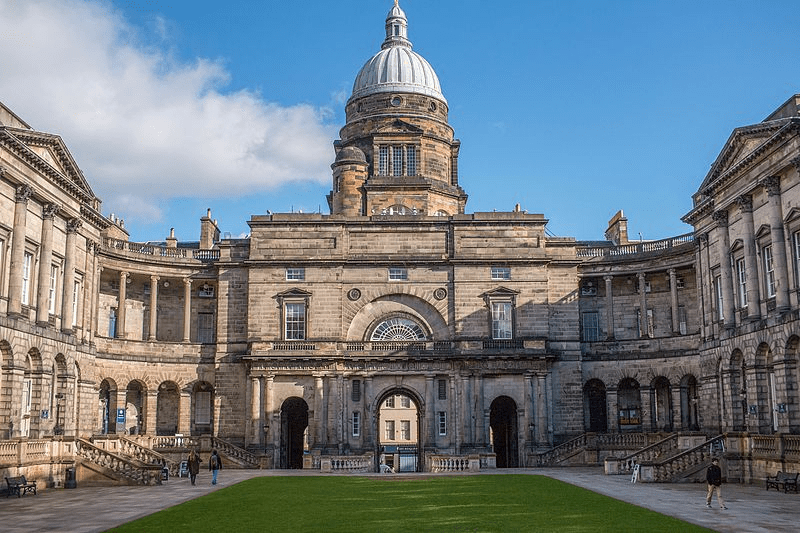
It’s worth noting that the University only gained full control over its affairs in 1858, with the passing of The Universities (Scotland) Act 1858. Prior to this, the City Council solely managed the institution. This act allowed the establishment of governing bodies, specifically the General Council and the University Court.
Expansion Continues
The late 19th century saw a record number of students at the University, quickly outgrowing its old buildings. This led to a serious discussion about constructing new premises.
Robert Rowand Anderson was the fortunate winner of a public architectural competition. In 1877, he was entrusted with designing the new facilities for The University of Edinburgh Medical School, which were fully completed in 1888.
Modernisation and Growth
When the First World War began, many of the university’s buildings fell into disrepair and required extensive renovation.
This situation prompted the university leadership to purchase the lands of West Mains Farm to build a new campus there.
On 6th July 1920, the foundation stone was laid for the building that would later house the Chemistry Department.
Veterinary medicine was also one of the institution’s key specialisations. On 10th May 1951, the veterinary college, originally founded by William Dick in 1823, was transformed into The Royal (Dick) School of Veterinary Studies. It officially became part of the University at that time, gaining faculty status in 1964.
Further Developments
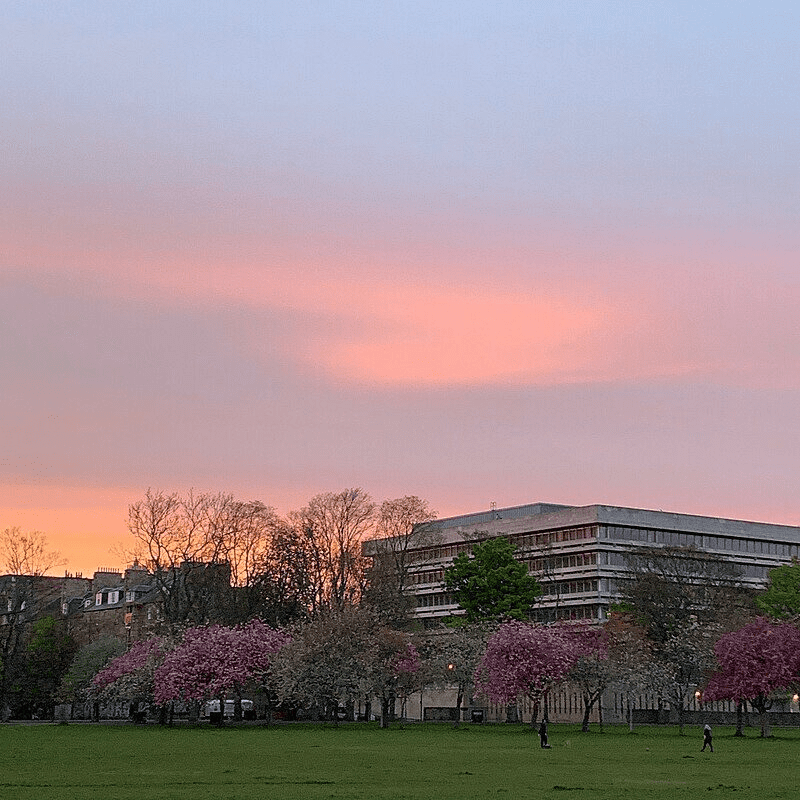
The 1990s were marked by the recognition that the old buildings of The Royal Infirmary of Edinburgh were no longer suitable for a modern teaching hospital. A collaborative decision was made by local authorities, private sponsors, and the university leadership to create a state-of-the-art medical campus and hospital in the Little France area.
The project came to fruition, with work completed in August 2002.
However, December of that same year, 2002, proved to be a very sad time for the institution. A severe fire damaged university buildings, notably The School of Informatics. As a result, the Informatics Forum was built. Also in 2002, the Edinburgh Cancer Research Centre was established.
April 2008 saw another significant event: The Roslin Institute, a livestock research centre famed for cloning Dolly the sheep, became part of The Royal (Dick) School of Veterinary Studies. In 2011, the latter relocated to a more spacious campus. This new site subsequently housed not only teaching and research facilities but also a hospital for small and farm animals.
It’s important to note that these innovations also extended to the Edinburgh College of Art. Founded way back in 1760, it merged with the university’s School of Arts, Culture and Environment in 2011.
Beyond its own internal changes and transformations, the University of Edinburgh actively collaborates with other educational institutions. In 2014, it established a joint institute with Zhejiang University (the Zhejiang University – University of Edinburgh Institute), offering programmes taught in English. Students there have the opportunity to earn a degree in biomedical sciences.
However, among all the improvements, innovations, and changes at the University in the 21st century, it’s fair to highlight one that can truly be called the most significant.
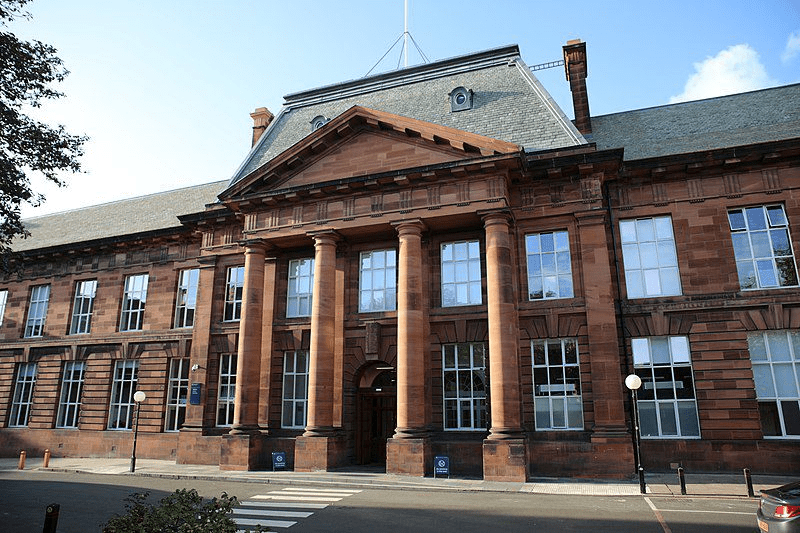
This involved the transformation of the historic buildings of The Royal Infirmary of Edinburgh. The project was incredibly expensive, but it resulted in the creation of The Edinburgh Futures Institute, an interdisciplinary centre that blends humanities, social sciences, and arts with other disciplines to research multifaceted, complex societal issues. The centre opened its doors on 4th June 2024.
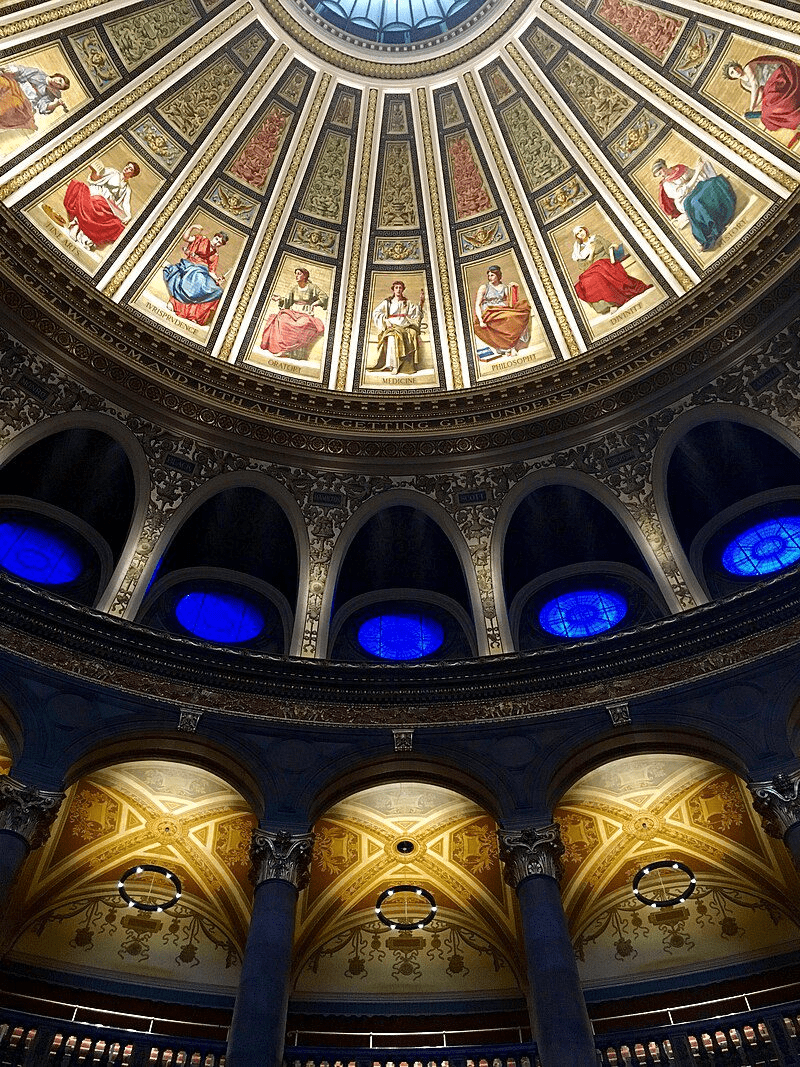
Thus, The University of Edinburgh is a true witness to Edinburgh’s past. Its individual development has harmoniously intertwined with the major historical events of this amazing city. Many significant figures played a crucial role in the establishment of this educational institution.
All of this transforms the University into an incredibly interesting and attractive object, not only as an educational hub but also from a cultural and historical perspective.