

Edinburgh society is notable for the sheer number of talented individuals it produces. It’s truly striking, almost as if the city’s very atmosphere fosters the development of unique personalities. Find out more at edinburgh1.one.
Ludovic Kennedy stands out as one of Scotland’s most brilliant journalists, a prime example of Edinburgh’s gifted populace. Indeed, his talent was remarkably multifaceted, extending far beyond the realm of mere journalism.
Early Life and Naval Service
Kennedy was born in Edinburgh on 3 November 1919. His educational journey began at Eton College and continued at Christ Church, Oxford.
Ludovic’s father served in the Royal Navy, so when the political situation began to escalate, he decided to follow in his father’s footsteps, becoming an officer on destroyers, primarily in the northern seas.
Interestingly, Kennedy’s ship, HMS Tartar, was among those pursuing the battleship Bismarck at the tail end of the Battle of the Denmark Strait. Thus, Ludovic was a witness to historical events as the Bismarck caught fire and her crew rapidly abandoned ship. He later chronicled this dramatic event in his book.
A Full Return to Journalism
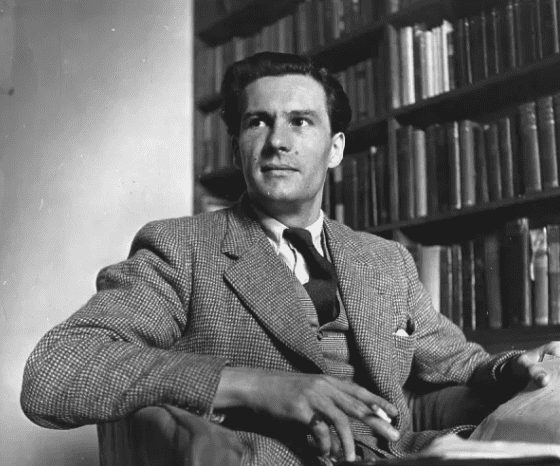
However, despite his service in the Royal Navy, he still yearned to return to Christ Church to complete his studies. In addition to his academic pursuits, Ludovic also edited the student newspaper, ‘The ISIS Magazine’. Once his studies concluded, he fully immersed himself in his chosen profession, becoming a journalist.
Television Journalism: A New Career Phase
Kennedy collaborated with numerous publications, notably ‘Newsweek’.
In 1953, Ludovic embarked on an exciting new project: ‘First Reading’, the first radio serial. This period undoubtedly influenced the trajectory of Kennedy’s career, as his next step was into television journalism.
He became a newsreader for ITV and later took on the role of presenter for the renowned programme ‘Panorama’, a position he held successfully for several years.
Unique Investigative Projects
Kennedy was drawn to a form of journalism that demanded not only high-quality, engaging material but also in-depth investigation.
He was particularly fascinated by naval subjects.
This passion enabled Ludovic to create unique television documentaries illuminating the naval history of the Second World War, which were subsequently aired on the BBC.
Among Kennedy’s significant and large-scale career projects, ‘Did You See…?’ stands out. He presented this popular programme from 1980 to 1988, and it was a firm favourite with viewers.
Writing Books: A Means for Gripping Investigations
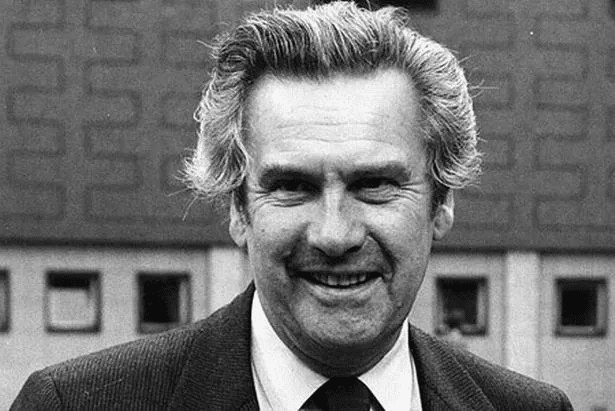
Ludovic’s books can rightly be considered a distinct and truly unique facet of his career. Through their creation, he was able to fully realise his immense interest in investigative work.
One of his most famous works was ‘Pursuit: The Chase and Sinking of the “Bismarck”’. In it, he meticulously detailed the ship’s story, how it sank the British battlecruiser Hood, and how it was subsequently destroyed by the Royal Navy.
Kennedy’s books became a genuine sensation, prompting readers to question the verdicts in several prominent legal cases.
Notably, Ludovic investigated the conviction and execution of Timothy Evans. The result of this meticulous work was his book ‘Ten Rillington Place’. This crime story revolves around Evans being found guilty of murdering his infant daughter. However, according to Kennedy, Evans was innocent, and the murder was committed by the serial killer John Christie.
Christie himself was executed three years after Evans was hanged, following the discovery of six more bodies he had killed. What’s more, remarkably, after a lengthy process and thorough review of the case, Evans received a posthumous pardon in 1966.
Crucially, this entire situation played a significant role in the subsequent abolition of the death penalty in the UK. In 1970, a film, ’10 Rillington Place’, was made based on Kennedy’s book.
Another Sensational Work
1985 saw the release of another sensational book by Ludovic: ‘The Airman and the Carpenter’. In it, the author explored the crime committed by Richard Hauptmann, who was executed in 1936 for the kidnapping and murder of Charles Lindbergh’s child. However, Kennedy argued that Richard was innocent, and the death penalty was wrongly applied.
A film based on this book, titled ‘Crime of the Century’, was later released in 1996.
A Figure Associated with the Extraordinary
Overall, it’s fair to conclude that Ludovic Kennedy’s career was largely defined by investigations. Both on television and through his books, he sought to astonish viewers with the unusual – facts that were either unknown or meticulously concealed. As Ludovic began publishing books, his detective persona was definitively solidified.
Furthermore, in 1990, he even chaired the advisory committee for Just Television, a television company dedicated to exposing miscarriages of justice.

Thus, Ludovic Kennedy became a truly unique figure in Edinburgh journalism. His name became virtually synonymous with sensation and the unexpected. Each mystery he uncovered transformed into an astonishing project that captivated the public.