

Education has always played a pivotal role in Edinburgh. This city boasts a high level of culture, which naturally means education receives considerable attention. You can read more about it at edinburgh1.one.
This trend has been evident since ancient times, when the Scottish capital was home to many distinguished figures. These individuals were truly passionate about their work, and it was through their direct involvement that various scientific institutions, theatres, museums, and numerous architectural marvels of Edinburgh came into being.
However, it’s fair to say that the field of education remains key to the city. Even when these figures were just starting out, it was Edinburgh’s educational establishments, with their ancient traditions and remarkably talented educators, that allowed future geniuses to flourish and, later, confidently make their mark.
Libraries as Witnesses to Cultural Development
Naturally, Edinburgh’s academic and educational institutions aren’t limited to just schools, colleges, universities, and academies. Libraries also deserve special mention. They are true founts of knowledge, preserving truly unique books, letters, and other valuable documents. Each of these artefacts is nothing less than a guardian of the city’s history, holding incredible insights into Edinburgh’s construction, the development of its industry and economy, the emergence of its culture, and, of course, the people who lived, created, and left behind an invaluable legacy.
Considering all this, it’s clear that libraries hold a special place among the city’s educational assets. Their past is directly linked to the stages of local development, the lives of various prominent figures, and the strengthening of Edinburgh’s culture and education.
An Institution Steeped in History
Fountainbridge Library is one of Edinburgh’s oldest libraries. It has a unique past that thoroughly deserves the attention of anyone even mildly interested in the scientific life of the Scottish capital.
However, this site is appealing not just for its primary function. Beyond its book collection, it’s a true architectural witness to many remarkable events that once unfolded on Edinburgh’s streets.
The Backstory of a Famous Landmark

As mentioned, Fountainbridge Library boasts a captivating history, and this article offers readers a chance to delve deeper into the fate of this valuable institution.
The site on Dundee Street where Fountainbridge Library now stands has been a library location since 1897. That’s when the first public library, initially called West Branch, was established there. Funding for the building came from the philanthropist Thomas Nelson. He passed away in 1892 but had previously left a significant sum to build “Nelson Halls” in Edinburgh. However, at that time, Edinburgh’s libraries were looking to expand, leading to a decision to combine funds for a single project: a new library.
A Sudden Decision Made for Good Reason
By the mid-1930s, due to substantial repair costs and a persistent lack of space, the need for a new library building became apparent. Readers were informed of the deadline for returning books, and by Saturday, 9th October 1937, everyone had to return borrowed items.
An architect was chosen for the new library’s construction, and work on the project progressed quite actively. Drawings were finalised and approved, and it was at this stage that the decision was made to name the library Fountainbridge Library.
Successful Project Realisation
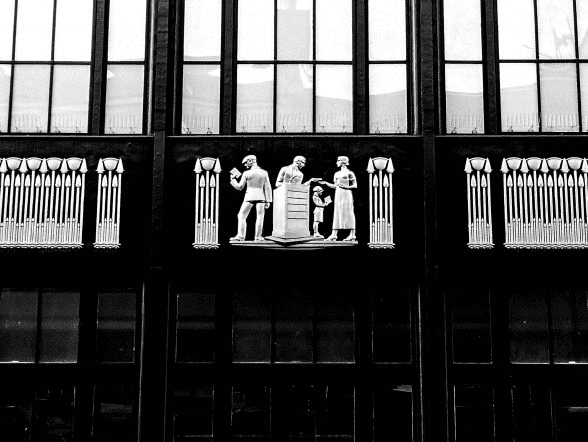
Unfortunately, the outbreak of the Second World War slowed progress. Nevertheless, thanks to the dedication of those invested in its construction, the library was ultimately opened despite all the challenges. The official ceremony took place on 11th March 1940.
At that time, Fountainbridge Library held over 30,000 books. The institution also featured a reading room, a games room, a reference room, and a children’s room.
Further Structural Changes to the Library
It’s important to note that Fountainbridge Library endured the difficult war years with dignity. It stood strong and continued its operations against all odds. By 1950, the institution was lending out 260,000 books annually.
Furthermore, the old library building was repurposed effectively, housing the Scottish Book Centre, the Edinburgh International Book Festival, and Publishing Scotland. As for the newly built Fountainbridge Library, the reference room, games room, and children’s room were removed. However, after the renovation, The Bainfield Room was added. This special meeting space successfully hosts author events, various educational activities, and classes.
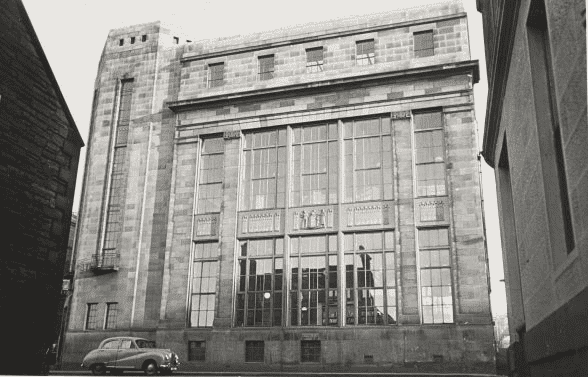
Thus, Fountainbridge Library stands as one of Edinburgh’s oldest libraries. This institution is deeply connected to the city’s entire past, having played a crucial role in the enlightenment of the local population. And the building itself can rightly be considered a valuable piece of Edinburgh’s architecture. It has withstood numerous challenges and maintained its primary function: to share knowledge with people and promote education.