

Scottish journalism is a field with powerful potential. Throughout various years and eras, representatives of this profession have been able to lead public opinion through their written work. Read more on this topic at edinburgh1.one.
By compelling society to reflect on the most pressing issues, journalists successfully built impressive careers. Especially in Scotland, where such critical questions were always abundant. The issue of gender equality, with all its consequences—granting women the right to education, voting, and more—sparked intense debates that agitated society.
Naturally, against this backdrop, individuals with a talent for writing could boldly announce their presence. All it took was publishing a single noteworthy article. Lily Laverock became one of them. She was known not only as a highly talented journalist but also as an active member of the suffragette movement. A true two-for-one personality.
Early Years and Emigration
Laverock was born in Edinburgh in 1880. However, from the age of ten, she had to adapt to the traditions and customs of Canada. In other words, Lily became an emigrant in the 1890s. She began her education at Victoria High School and continued on to McGill University.
Interestingly, it was during her student years that Laverock played an active role in establishing the University’s Women’s Club.
Career Development
The young Lily began to recognise the urgent need to support women in all areas of their lives, especially in obtaining an education. All this led to a landmark moment in 1908 when she became the first woman hired as a reporter for the Vancouver newspaper, The World. This event was truly sensational.
In 1909, Laverock moved to the Vancouver Daily News Advertiser. Furthermore, she took on the role of secretary and treasurer for the first Vancouver branch of The Canadian Women’s Press Club (which later became The Media Club of Canada).
It seemed Lily’s career was on a steep ascent, and many would have tried to hold onto those positions and achievements. Anyone but Laverock, that is. In 1910, she decided to leave the Vancouver Daily News Advertiser. As it turned out, this was to allow her to found her own publication in 1911: The Chronicle, British Columbia’s first women’s newspaper.
Bold Coverage of Pressing Women’s Issues
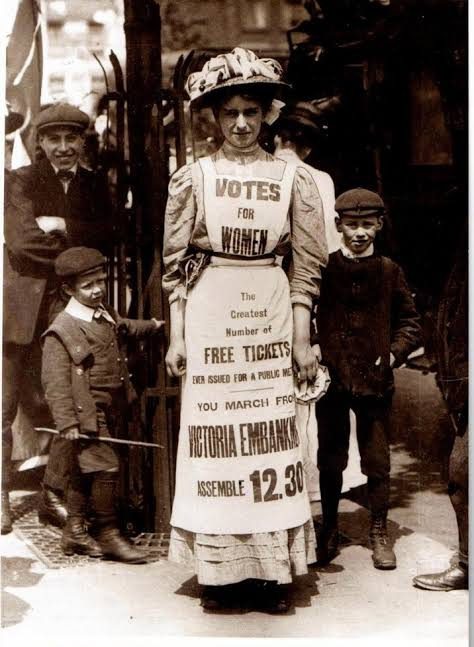
Crucially, Lily was an activist in the Canadian women’s suffrage movement. Given her position as a suffragist journalist, it is no surprise that Laverock frequently highlighted this topic in her pieces, compelling many to delve into its numerous details and nuances. Additionally, Lily’s articles often featured various women’s organisations, shedding light on their objectives and activities.
Articles Reflecting Lily’s Views
Naturally, as a journalist, Laverock was interested in other feminist concerns. All these issues were reflected in her essays in one way or another. Notably, Lily supported the idea of improving property laws for women.
The Arts: A Lifelong Passion and Second Profession
However, talented individuals often excel in multiple fields, showing heightened curiosity and an inquisitive mind. Lily was no exception. Besides journalism, she had a strong interest in the arts. By 1921, she had successfully worked as an impresario, organising international concerts for well-known performers.
Her love for the arts was so profound that even after retiring in the 1950s, she made an effort never to miss a significant performance. Laverock can therefore be confidently described as a fervent devotee of not only suffragism but also the arts. Interestingly, Lily often attended concerts accompanied by her friend, Helena Gutteridge.
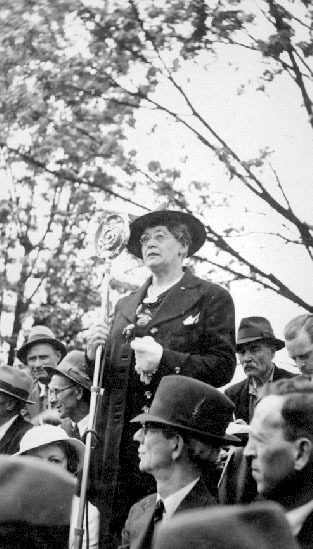
Thus, Lily Laverock was a vivid character who combined unique qualities: a talented journalist and a courageous defender of women’s rights. The profile seems complete, but what more could be added? As it turns out, the arts also played a crucial role in her life, connected by genuine love and deep respect. This reveals a striking multi-layered personality, making her even more intriguing. It creates the impression that Lily’s character concealed something further secret and unknown. It is quite possible this was the case, though perhaps this hidden depth remained a mystery even to Laverock herself.
The earthly journey of the journalist-suffragist ended on 2 December 1969. Yet, many years later, she continues to be remembered. People admire her persistence, skill, and boundless devotion—devotion to her principles, her views, her ideas, and above all, to the causes she truly loved, sparing neither effort, time, nor her life.