

James Currie truly stands out as one of Scotland’s most remarkable businessmen. What makes his story particularly fascinating is how he seamlessly blended entrepreneurial success with a profound passion for botany, mineralogy, and archaeology. This unusual combination of hobbies even led him to become the President of the Royal Society of Edinburgh.
You can discover more about his life at Edinburgh1.one.
Despite his deep academic interests, James managed to run his businesses with considerable success, capably handling his leadership duties. It’s quite intriguing, isn’t it – a businessman deeply involved in science! Let’s delve deeper into how these seemingly disparate worlds coexisted in one man’s life, and how such a gifted scholar found himself unexpectedly becoming an entrepreneur.
Early Life
James was born on 13th April 1863. His father was a prominent shipowner and shipbuilder, initially managing the Leith Hull and Hamburg Steam Packet Company. However, he later decided he had enough experience and drive to establish his own shipping companies.
Education
James himself began his educational journey at Edinburgh Academy, where he was a student from 1876 to 1879. Following this, he continued his studies at both the University of Edinburgh and Cambridge University, ultimately graduating with a Master’s degree.
Funding a Son’s Passions
Given that James was, in essence, born with a “silver spoon in his mouth,” all his interests – especially his scientific pursuits – were actively supported and funded by his family. There were certainly no financial constraints.
However, James’s business acumen, in contrast to his scientific prowess, was initially less developed. This remained the case until 1900, when a tragic event dramatically altered his path.
A Sudden Necessity
The sudden death of his father meant that James had to take over the family business. He became the owner and director of his father’s companies: the shipbuilding firm James Currie & Co and the shipping line Currie Line.
As a result, ships and substantial real estate fell into James’s hands, along with a considerable inheritance of money.
Scientific Achievements
Returning to James’s scientific passions and activities, it’s worth noting that he was elected a Fellow of the Royal Society of Edinburgh in 1897, three years before his father’s passing.
When fate compelled him to take over the family business and immerse himself in the world of commerce, he didn’t abandon science; instead, he began to integrate it with his entrepreneurial endeavours.
In 1919, the University of Edinburgh bestowed upon him an honorary doctorate.
Furthermore, James chaired the Edinburgh Geological Society from 1904 to 1906. And in 1926, he even had the distinction of becoming the President of the Royal Society of Edinburgh.
Business Handed Down
James’s life came to an end on 3rd November 1930. The talented scientist and “hereditary” businessman passed away at his villa.
After his death, the family business was passed on to Alastair Currie, his younger brother.
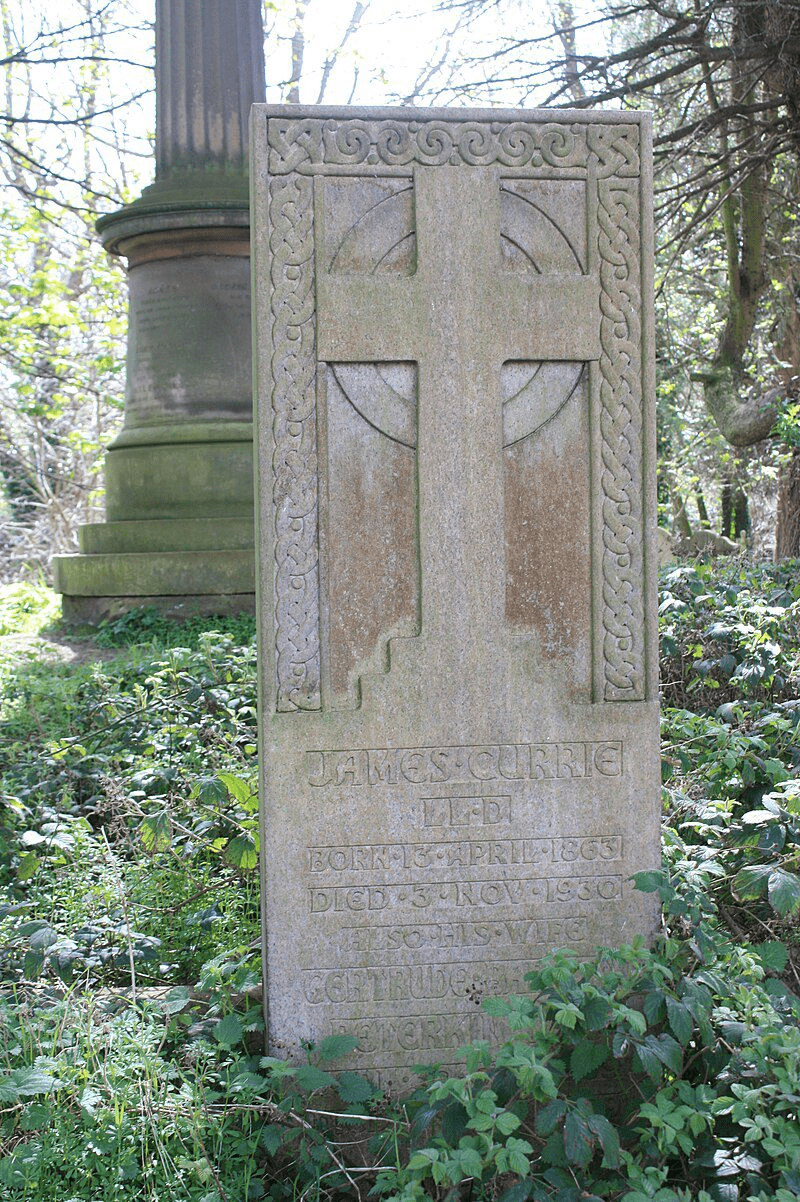
Thus, James Currie stands as a compelling example of how an individual can successfully balance vastly different fields. Even though he was compelled to enter the world of business against his initial inclinations, he managed to master it. Unfortunately, detailed information about James’s entrepreneurial successes is scarce, but the mere fact that the business didn’t collapse and was later passed on to his younger brother is clear proof that everything was managed effectively.
This also speaks volumes about James’s multifaceted intellect. How else can one explain how a man, actively developing in science, could, when necessary, familiarise himself with business administration and successfully take on a leadership role, all while never forgetting his beloved scientific pursuits?